
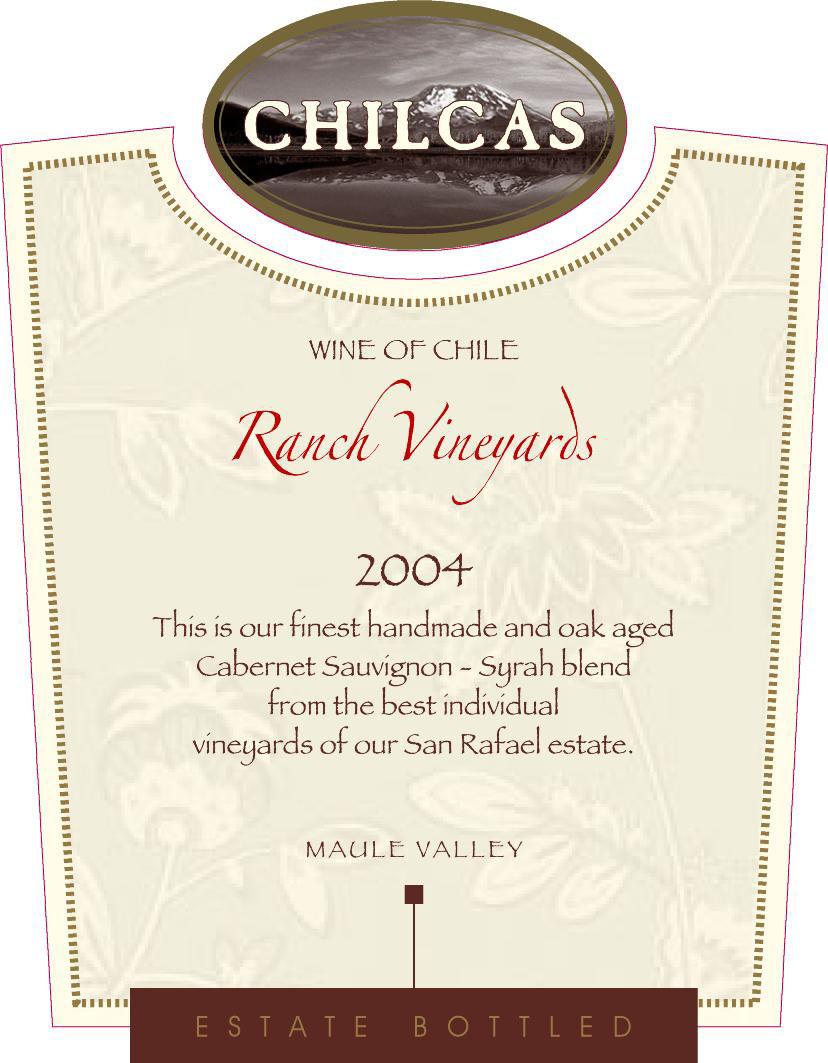
2004 Maule Valley Cabernet Sauvignon - Syrah
Chilcas Ranch Vineyards' 2004 Cabernet Sauvignon - Syrah blend from the stunning Maule Valley showcases a captivating deep red hue, inviting wine enthusiasts to explore its complex character. This wine embodies a full-bodied structure, perfectly complemented by high acidity that adds a refreshing brightness to each sip. The rich fruit intensity brings forth prominent notes of dark berries, plums, and currants, harmoniously intertwined with subtle hints of spice and earthy undertones. Tannins are notably firm, creating a well-structured mouthfeel that promises longevity and elegance. With a dry profile, this captivating blend is perfect for pairing with hearty dishes or savoring on its own, making it a delightful addition to any collection.
Chilcas Ranch Vineyards' 2004 Cabernet Sauvignon - Syrah blend from the stunning Maule Valley showcases a captivating deep red hue, inviting wine enthusiasts to explore its complex character. This wine embodies a full-bodied structure, perfectly complemented by high acidity that adds a refreshing brightness to each sip. The rich fruit intensity brings forth prominent notes of dark berries, plums, and currants, harmoniously intertwined with subtle hints of spice and earthy undertones. Tannins are notably firm, creating a well-structured mouthfeel that promises longevity and elegance. With a dry profile, this captivating blend is perfect for pairing with hearty dishes or savoring on its own, making it a delightful addition to any collection.


